
Diachronic modeling of (bio)climate conditions at a fine spatial scale in the main cities of North-East Romania (western Moldavia)
Project number 96PCE/15.07.2025; Project code PN-IV-P1-PCE-2023-0897
Implementation period: 15.07.2025-14.07.2028
About project
Project title:
Diachronic modeling of (bio)climate conditions at a fine spatial scale in the main cities of North-East Romania (western Moldavia)
Acronym: MOBCLIM
Project number: 96PCE/15.07.2025;
Project code: PN-IV-P1-PCE-2023-0897
Implementation period: 15.07.2025-14.07.2028
Budget: 229.473,80 Euro
Acronym: MOBCLIM
Project number: 96PCE/15.07.2025;
Project code: PN-IV-P1-PCE-2023-0897
Implementation period: 15.07.2025-14.07.2028
Budget: 229.473,80 Euro
Project summary:
The increased amount of weather observations combined with the higher accuracy of the interpolation methods, fostered by machine learning, drive nowadays the climate assessment toward modeling approaches. The current project proposes an extensive spatial insight of climate and bioclimatic conditions in the main 8 cities of North-East Romania through high spatial resolution modeling. The climate modeling will be performed in MOBCLIM project through satellite image disaggregation, but especially with ENVI-met software, and explored with similar tools (PALM-4U). For each city the (bio)climate modeling will sample the main local climate zones (LCZ), but also the city center, defined by the highest human mobility. Input data for climate modeling and also the validation of modeling results will be represented by gridded datasets, official weather monitoring data, but also from in-situ or mobile measurements planned in the MOBCLIM project. Cold and heat stress will be equally tackled with their characteristics determined by the atmospheric circulation conditions. A diachronic perspective of the proposed analysis will be given by the assessment of the present conditions, as derived from observation (2004-2023), but also of future medium-term conditions, as estimated by climate scenarios (2051-2070). Dissemination of the scientific results is split towards scientific deliverables, but also to the support of the sustainable urban planning in the context of climate change.
Objectives
The main goal of the project is to enlarge the existing knowledge on the field of urban climate in Romania through detailed analysis of 8 primary cities in the north-eastern part of Romania, summing up more than 1.4 million inhabitants.
O1: To update the description of current urban climate conditions for 6 cities and to extend its analysis to 2 other analyzed cities.
O2: To realize an assessment of thermal discomfort in the analyzed cities using some relevant bioclimatic indices (UTCI and WCPI) applied for summer HWs and winter CWa.
O3: The modeling of urban climate at a fine spatial scale for relevant urban areas.
O4: To explore the impact of green and blue solutions for the most relevant key-regions of thermal discomfort.
O5: Climate change education for citizens and stakeholders based on project results.
Project team
Assoc. Prof. PhD Lucian Sfîcă
Prof. PhD. Adina-Eliza Croitoru
Assoc. Prof. PhD Dumitru Mihăilă
SR Marius-Victor Bîrsan
Lect. PhD. Pavel Ichim
Assit. PhD Petruț-Ionel Bistricean
Lect. PhD. Lucian Roșu
PhD Stud. Vlad-Alexandru Amihăesei
PhD Stud. Claudiu-Ștefănel Crețu
PhD Stud. Robert Hrițac
PhD Stud. Alexandru-Constantin Corocăescu
Results
A. Scientific papers:
A.1. Scientific article published in WoS journals:
1. Ichim, P., Țurcanu, R., Sfîcă, L., 2026. Optimizing biometeorological comfort in the central pedestrian area of Iași city through various urban design scenarios implemented with Envi-Met, Geographia Technica, 21, 2, 133-149, doi: 10.21163/GT_2026.213.09 (IF: 0.8/Q4; AIS: 0.098).
2. Schlechtweg, P., Brenning, A., Käyhkö, J., Sfîcă, L., 2026. Mapping heat-related risk in three mid-sized European cities. City and Environment Interactions, 31, 100415, doi: 10.1016/j.cacint.2026.100415 (IF: 5.3/Q1; AIS: 0.769).
A.2. Scientific article submitted in a WoS journal:
1. Ichim, P., Sfîcă, L., Bistricean, P.B., Crețu, Ș.C., Hrițac, R., 2025. Spatial identification and prediction of thermal spots based on mobile measurements in urban areas. Frontiers in Climate, submitted in December 2025, currently in major revision (IF:3.9).
2. Mihăilă, D., Bistricean, P.I., Sfîcă, L., Horodnic, V.D., Hrițac, R., Boiciuc, C.A., Nistor, B., Mihalache, A., Nistor, A., Chiriloaei, F., 2026. From synoptic background to human perception: an overview of thermal heat stress using a simple bioclimatic index (THI) for north-eastern Romania’ cities. Environment, Development and Sustainability, submitted in May 2026, currently under review (IF:4.9).
3. Schlechtweg, P., Brenning, A., Käyhkö, J., Sfîcă, L., 2026. Sensitivity of the 3-30-300 rule compliance to dataset choice: A multi-dataset assessment of urban greenness across European cities. City and Environment Interactions, submitted in May 2026, currently under review (IF: 5.3).
B. Participations in scientific events and conferences:
B.1. Abroad:
1. Hrițac, R., Breabăn, I.G., Sfîcă, L., Ichim, P., 2025. From cold pools to heat islands: machine learning-based urban temperature mapping during cold season, Mediterranean Geosciences Union, 5th Annual Meeting, 10-12 of November, National and Kapodistrian University of Athens.
2. Corocăescu, A.-C., Sfîcă, L., Ichim, P., Brenning, A., Crețu, Ș.-C., Grozavu, A., and Croitoru, I.-M., 2026. High-Resolution Land Surface Temperature Mapping for Urban Climate Applications Using Satellite Fusion and Machine Learning in Google Earth Engine, EGU General Assembly 2026, Vienna, Austria, 3–8 May 2026, EGU26-5920, https://doi.org/10.5194/egusphere-egu26-5920, 2026.
3. Sfîcă, L., Șoitu, D., Pintilie, E., Ichim, R., Hrițac, R., 2026. Insights into weather related excess mortality in the urban climate context of Iași. Annual forum of EC2U universities allience, Joint Scientific Session of WP4&WP6, Turku, 19-21th of May 2026, Turku, Finland.
B.2. In Romania:
1. Sfîcă, L., 2025. Premises, perspectives and opportunities in urban climatology research in Romania. Workshop: GIS applied in regional climatology, bioclimatology, topoclimatology and microclimatology, Vatra Dornei, 29 of August-1st of September 2025 (in Romanian) (1).
2. Ichim, P., 2025. Urban climate modeling with ENVI-met: scientific tool in applied climatology and bioclimatology. Workshop: GIS applied in regional climatology, bioclimatology, topoclimatology and microclimatology, Vatra Dornei, 29 of August-1st of September 2025 (in Romanian) (1).
3. Sfîcă, L., 2025. Progress in urban climate research in northeastern Romania. Webinar: Research projects carried out by ARMAE members, 2 of September 2025, online (in Romanian) (2).
4. Ichim, P., Țurcanu, R.S., Sfîcă, L., Crețu, C.Ș., Hrițac, R., 2025. Microclimatic Impacts of Paved vs. Green Urban Surfaces: ENVI-met-Based Analysis, International Geographical Seminar “Dimitrie Cantemir”, Ediția a XLV-a, 24-26 of October, Alexandru Ioan Cuza University of Iași (3).
5. Corocăescu, A.C., Sfîcă, L., Ichim, P., Grozavu, A., 2025. Assessment of the thermal capacity of urban parks to mitigate the urban heat island in the main cities in Romania, International Geographical Seminar “Dimitrie Cantemir”, Ediția a XLV-a, 24-26 of October, Alexandru Ioan Cuza University of Iași (3).
6. Hrițac, R., Breabăn, I.G., Sfîcă, L., Ichim, P., 2025. Synoptic drivers of high-impact winter hazards in Romania, International Geographical Seminar “Dimitrie Cantemir”, Ediția a XLV-a, 24-26 of October, Alexandru Ioan Cuza University of Iași (3).
7. Sfîcă, L., Țurcanu, R., Ichim, P., 2026. Fine-Scale Assessment of Urban Climate Conditions: Optimizing Biometeorological Comfort in Pedestrian Areas of Iași City Center Using ENVI-met Simulations. 18th edition of Air and Water – Components of the Environment” Conference, 20-22.03.2025, Cluj-Napoca, Romania (4).
8. Croitoru I.M., Sfîcă, L., Hrițac, R., Corocăescu, A.C., 2026. Analysis of thermal inversion phenomena in urban areas using modern methods and climatic modelling in ENVI-Met, 32nd edition of International Symposium of GIS – Backup Edition, Faculty of Geography and Geology, 27 of March 2026, Alexandru Ioan Cuza University of Iași (5).
9. Corocăescu, A.C., Sfîcă, L., Croitoru, I.M., Grozavu, A., 2026. Thermal regulation potential of blue-green corridors in urban areas: assessing the cooling intensity of lakes and adjacent green spaces. 32nd edition of International Symposium of GIS – Backup Edition, Faculty of Geography and Geology, 27 of March 2026, Alexandru Ioan Cuza University of Iași (5).
10. Croitoru, I.M., Ichim, P., Sfîcă, L., Hrițac, R., 2026. Analysis of thermal inversion phenomena using modern analysis methods and climatic modelling in Envi-Met, 21st edition of Present Environment and Sustainable Development, 12-14 of June 2026, Alexandru Ioan Cuza University of Iași (6).
11. Corocăescu, A.C., Croitoru, I.M., Sfîcă, L., Ichim, P., 2026. Advancing local climate zone mapping: a machine learning framework for 30 m urban climate classification, 21st edition of Present Environment and Sustainable Development, 12-14 of June 2026, Alexandru Ioan Cuza University of Iași (6).
12. Ichim, P., Sfîcă, L., et al., 2026. Flowering phenology of Prunus armeniaca as a bioindicator of urban climatic and microclimatic conditions in Iași, Romania, 21st edition of Present Environment and Sustainable Development, 12-14 of June 2026, Alexandru Ioan Cuza University of Iași (6).
13. Cristodulo, P.M., Roșu, L.I., Sfîcă, L., Opaiț, A., 2026. Challenges in assessing the 3-30-300 rule through satellite data and deep learning: a planning tool for urban green equity and climate adaptation, 21st edition of Present Environment and Sustainable Development, 12-14 of June 2026, Alexandru Ioan Cuza University of Iași (6).
B.3. Participation in student conferences in Romania under the coordination of members of the MOBCLIM research team:
1. Corocăescu, A.C., 2025. Multisensor fusion and spatial disaggregation of Land Surface Temperature: a comparative analysis of Landsat 8/9-Sentinel-2 and MODIS-Sentinel-2 Approaches (Award-winning presentation). National Student Symposium “Mihai David”, 15th edition, November 21-23, 2025, “Alexandru Ioan Cuza” University of Iași (in Romanian) (1).
2. Croitoru, I.M., 2025. Modern methods for analyzing thermal inversion phenomena. Case study: Ski slope in Iași municipality. National Student Symposium “Mihai David”, 15th edition, November 21-23, 2025, “Alexandru Ioan Cuza” University of Iași (in Romanian) (1).
3. Țurcanu, R.S., 2025. Evaluating the effectiveness of vegetation in alleviating urban thermal discomfort through ENVI-met full forcing modeling (Award-winning presentation). National Student Symposium “Mihai David”, 15th edition, November 21-23, 2025, “Alexandru Ioan Cuza” University of Iași (in Romanian) (1).
4. Pintilie, E., 2025. Analysis of thermal comfort in the cold season for the municipality of Iași based on bioclimatic indicators derived from UCLARIS data (2013-2022). National Student Symposium “Mihai David”, 15th edition, November 21-23, 2025, “Alexandru Ioan Cuza” University of Iași (in Romanian) (1).
5. Croitoru I.M., 2026. Analiza fenomenelor de inversiune termică prin metode moderne de analiză și modelare climatică în ENVI-Met. Coordonatori: Lect. univ. dr. Pavel Ichim; Conf. univ. dr. Lucian Sfîcă. Simpozionul național al studenților geografi, Ediția a XXXII-a, București, 20-22 martie 2026 (First Prize) (2).
6. Pintilie E., 2026. Analiza confortului termic în sezoanele de iarnă și vară pentru municipiul Iași utilizând datele UCLARIS (2013-2022). Coordonatori: Conf. univ. dr. Lucian Sfîcă, Lect. univ. dr. Pavel Ichim. Simpozionul național al studenților geografi, Ediția a XXXII-a, București, 20-22 martie 2026 (2).
7. Țurcanu, R. 2026. Optimizarea confortului biometeorologic în zonele pietonale urbane prin diverse scenarii de proiectare urbană. Coordonatori: Lect. univ. dr. Pavel Ichim, Conf. univ. dr. Lucian Sfîcă. Simpozionul național al studenților geografi, Ediția a XXXII-a, București, 20-22 martie 2026 (2).
8. Croitoru, M.I., 2026. Analysis of thermal inversion phenomena in urban areas using modern analysis methods and climate modelling in Envi-Met. Coordonatori: Lect. univ. dr. Pavel Ichim, Conf. univ. dr. Lucian Sfîcă, Drd. Robert Hrițac. Simpozionul Internațional al Studenților Geografi, Ediția a XV-a, Suceava, 26 iunie 2026 (Second Prize) (3).
C. Bachelor and dissertation theses elaborated (in Romanian) within MOBCLIM research framework
1. Ecaterina Pintilie, Thermal discomfort and its bioclimatic impact on mortality in the city of Iași, bachelor's thesis, specialization Geography, UAIC, Iași, coordinator Assoc. Prof. Dr. Lucian Sfîcă, session July 2026.
2. Tudor Tamaș, Microclimate of residential neighborhoods built before 1990 in the city of Iași. Case study: Alexandru cel Bun neighborhood, bachelor's thesis, specialization Hydrology-Meteorology, UAIC, Iași, coordinator Lect. Dr. Pavel Ichim.
3. Ștefan-Gabriel Vițelariu, Analysis of bioclimatic indices based on mobile measurements in the city of Vaslui, bachelor's thesis, specialization Hydrology-Meteorology, UAIC, Iași, coordinator Lect. Dr. Pavel Ichim.
4. Alexandru Teișanu, The regime and distribution of the ITU discomfort index in Western Moldova, dissertation work, GIS and Territorial Planning specialization, USM, Suceava, coordinator Assoc. Prof. Dr. Dumitru Mihăilă, July 2026 session.
5. Robert-Sebastian Țurcanu, Simulation of biometeorological comfort and discomfort conditions in urban pedestrian areas using Envi-met software, dissertation work, Geomatics specialization, UAIC, Iași, coordinator Lect. Dr. Pavel Ichim.
6. Ioana Stoian, Modeling the urban microclimate using GIS techniques and ENVI-met software. Case study: the leisure island of Bacău municipality, dissertation work, Geomatics specialization, UAIC, Iași, coordinator Lect. Dr. Pavel Ichim.
7. Andrei Luca, Evaluation of the microclimatic characteristics of the civic center in Vaslui municipality, dissertation work, specialization Geomatics, UAIC, Iași, coordinator Lect. dr. Pavel Ichim.
8. Liviu-Valentin Răduc, Identification of potential thermal discomfort areas generated by the urban heat island effect using the Envi-Met software. Case study: Bacău municipality, dissertation work, specialization Geomatics, UAIC, Iași, coordinator Lect. dr. Pavel Ichim.
9. Iulian-Sebastian Adam, Modeling thermal discomfort in pedestrian spaces. Case study: civic center of Piatra Neamț municipality, dissertation work, specialization Natural hazards and spatial planning, UAIC, Iași, coordinator Lect. dr. Pavel Ichim.
D. Data processing script for fine-scale LST spatialization:
1. https://code.earthengine.google.com/14141fcb73754b73ada8f907054d6679
E. Cognitive and socio-economic impact.
a. Social-media posting:
1. Facebook: https://shorturl.at/01TnD (in Romanian).
2. Facebook: https://shorturl.at/rrYu6 (in Romanian).
3. Press: https://shorturl.at/bVOMN (in Romanian).
4. Press: https://shorturl.at/9G4HC (in Romanian).
5. Facebook: https://shorturl.at/jZpYH (in Romanian).
7. https://www.facebook.com/photo?fbid=1518647663395689&set=a.571108414816290
b. Press:
c. Public events:
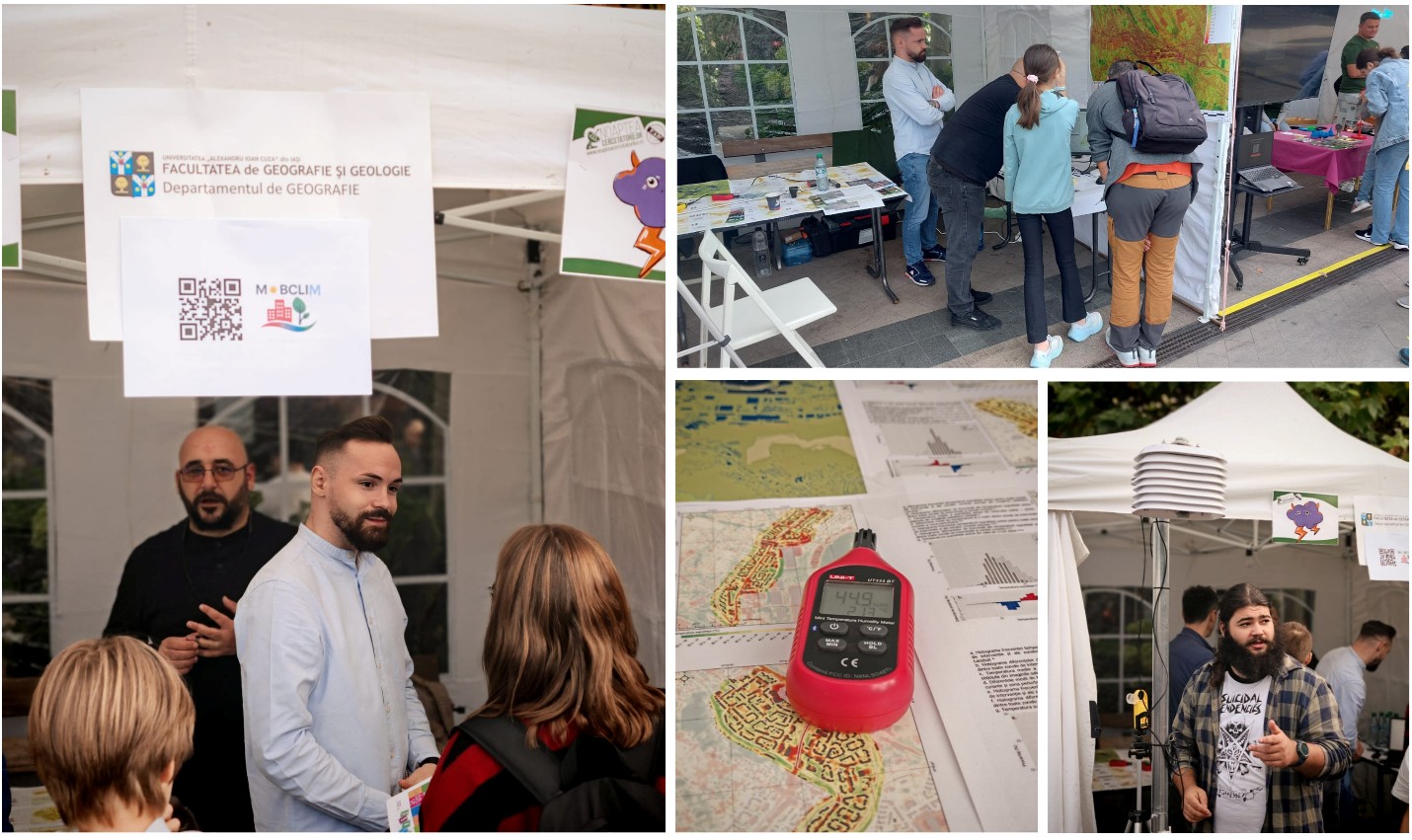
1. Participation in the European Researchers' Night, September 26, 2025, Iași, Palace Garden.
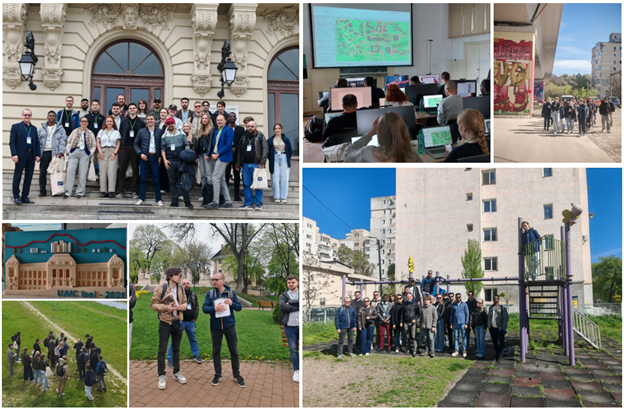
2. Blended Intensive Program: “Urban Heat Island – from problem to solutions”. The program was directly aligned with SDG #11: Sustainable Cities and Communities and was delivered in an international, interdisciplinary format with the involvement of four EC2U universities.
The programme followed a summer school schedule, with online activities (2 of March – 1 of April) and evaluation (6-13 of May) and on-site activities taking place in Alexandru Ioan Cuza of Iași between 20 and 24 of April 2026. In this activity have been involved Students (3), Master Students (10) and PhD Students (3) from 5 universities (University of Turku-Finland, University of Coimbra-Portugal, University of Pavia, Alexandru Ioan Cuza University of Iași, University of Lviv). The speakers in the BIP are specialist and experts in various fields connected with urban climate studies (Prof. Jukka Kayhko, Assoc. Prof. Lucian Sfîcă, Lect. Lucian Roșu), univeristy climate managers (Lukas Lehner), architects (Gaia Terlicher), building thermal efficienty (Prof. Eugenio Rodrigues). Training activities were ensured by the local MOBCLIM team from the Alexandru Ioan Cuza University of Iași (Lect. Pavel Ichim, PhD Students: Alexandru Corocăescu, Claudiu Crețu, Robert Hrițac).
This BIP took participants from problem analysis all the way to practical, evidence-based solutions. Working on the city of Iași as a real-world case study — supported by fine-scale climate data produced by the host team's MOBCLIM research project — participants analyzed UHI dynamics and co-design Nature-Based Solutions (NbS) such as public playgrounds, blue-green infrastructure, urban ventilation corridors and indoor thermal solutions.
This BIP fully covered the objectives of a planned summer school scheduled in the MOBCLIM project for 2027 and represents the accomplishment in-advance of the activity.
Further details on this BIP: https://ec2u.eu/magazine/news/blended-intensive-programme-urban-heat-island-problem-solutions.
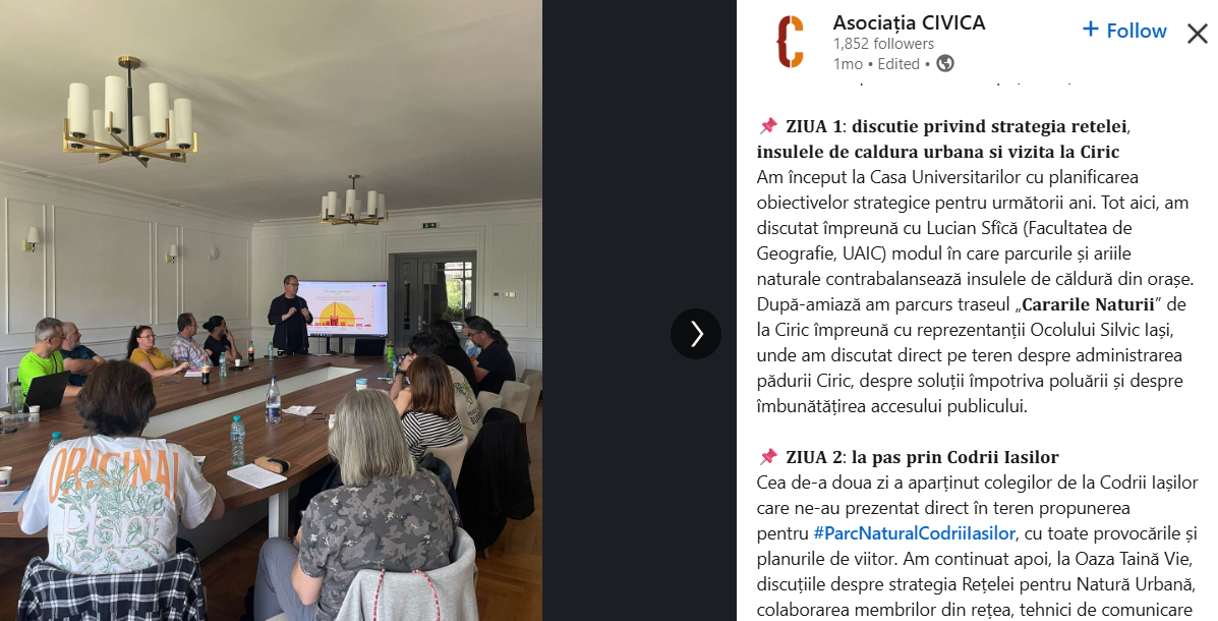
3. Public Lecture on the topic “On mapping cold and warm zones in cities and how they are influenced by parks and natural areas. Discussion with Lucian Sfîcă, Faculty of Geography and Geology, UAIC.” The event took place within the Meeting of the members of the Urban Nature Network, Iași, 27 of May 2026.
Further details: https://www.linkedin.com/posts/asocia%C8%9Bia-civica_parcnaturalcodriiiasilor-activity-7467895925529640960%20iZXI
Contact
Project Leader: Associate Professor PhD. Lucian SFÎCĂ
lucian.sfica (a) uaic.ro
Phone
+40232201074